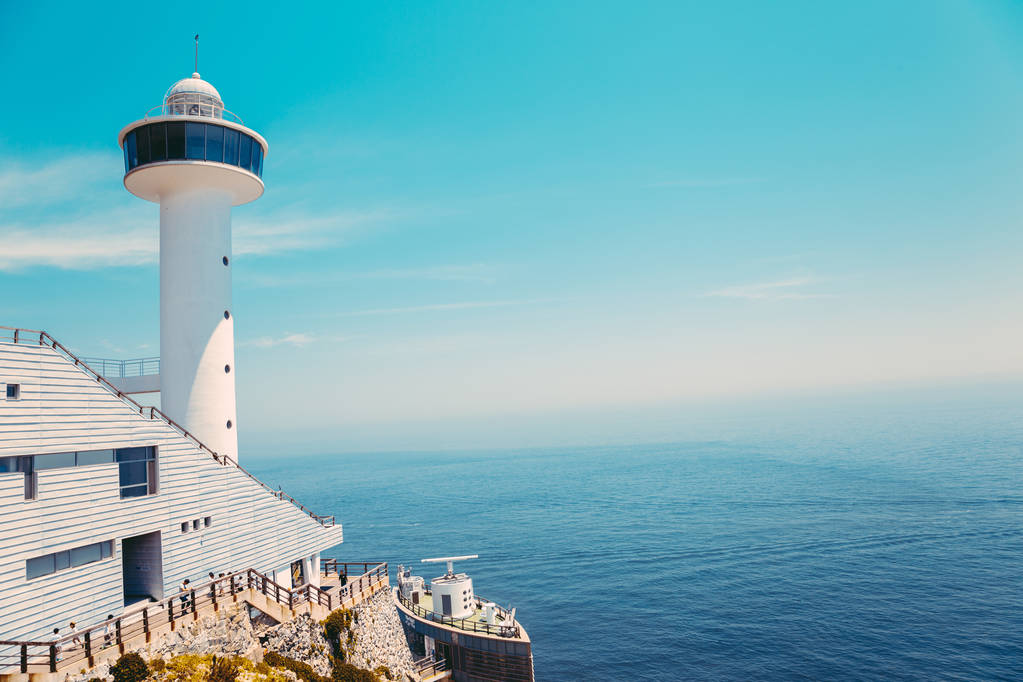
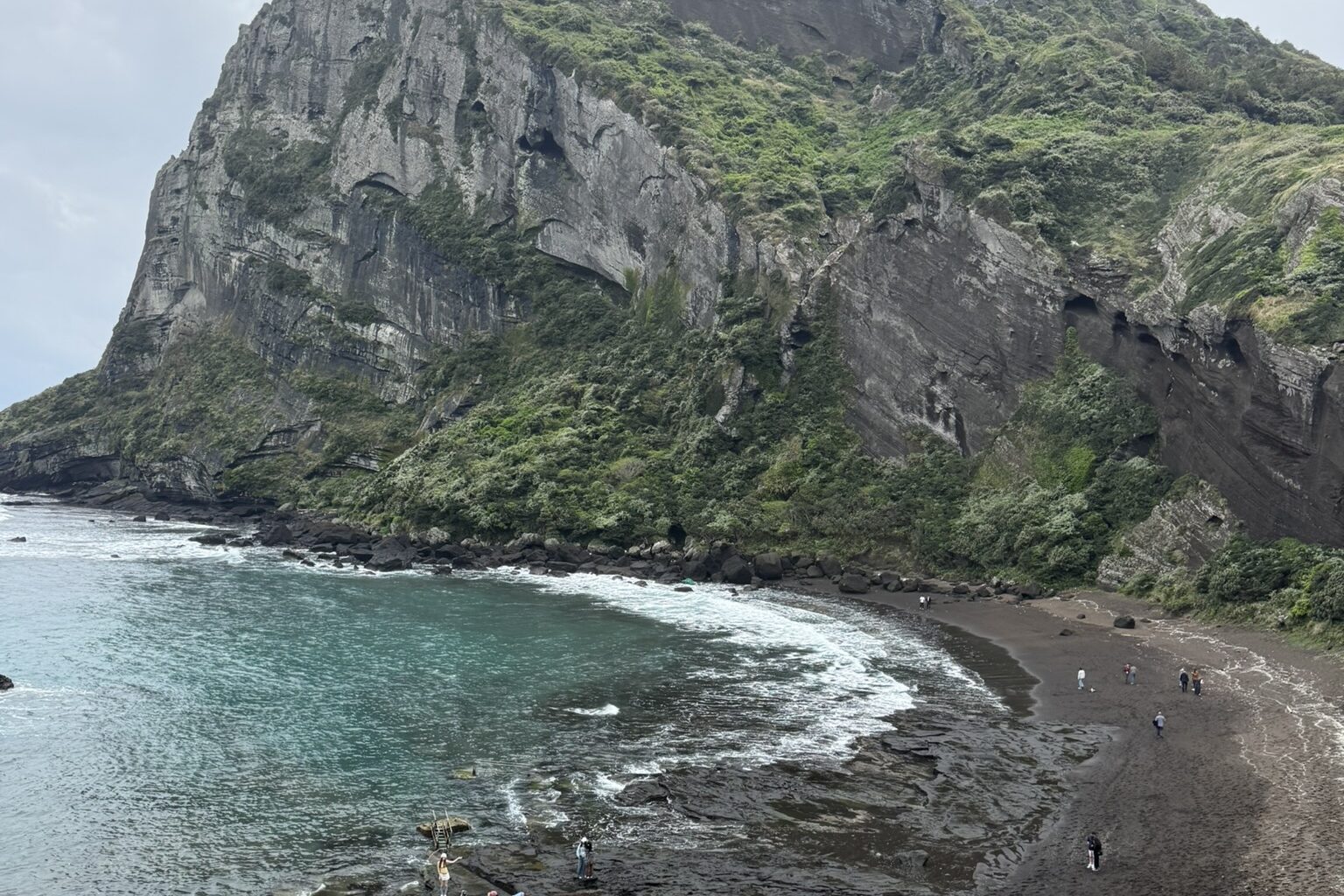
When it comes to Jeju Island, the beauty of the trip is often found on the road between destinations, not just at the sights themselves. Driving in Jeju Island gives you the freedom to pull over at coastal viewpoints, forest tunnels, and volcanic landscapes whenever something catches your eye. With two main cities: Jeju City in the north and Seogwipo in the south, the island is perfectly sized for relaxed road trips over a few days.

Why drive in Jeju Island
Outside Jeju City and Seogwipo, traffic is generally light, roads are well maintained, and signage is increasingly available in English, which makes driving approachable even for first‑time visitors to Korea. Having your own car lets you link beaches, waterfalls, oreum (parasitic cones), and tea fields into one continuous scenic route instead of hopping between isolated stops. If you would rather not drive, Jeju’s bus network and taxis still make it possible to get around the island at a slower but budget‑friendly pace.
For full details on licenses, insurance, and traffic rules, read 10 Magazine’s guide to Driving in Korea.
Cross‑island drive on Highway 1131
Highway 1131 is a classic north–south route linking Jeju City and Seogwipo, climbing through the middle of the island with plenty of reasons to stop along the way. Start in Jeju City with a visit to the historic Samseonghyeol site, which commemorates Jeju’s founding legends in a tranquil grove near the city center.
From there, head uphill toward the famous Mysterious Road, where the sloping landscape plays tricks on your eyes and makes cars appear to roll “uphill.” Continue on to the wide, open Jeju Horse Pasture Land for views of the island’s native horses grazing against Hallasan’s backdrop. As you drive south, you’ll pass through the Forest Tunnel, a photogenic stretch of road where thick trees form a leafy canopy over the asphalt, especially beautiful in late spring and early autumn.
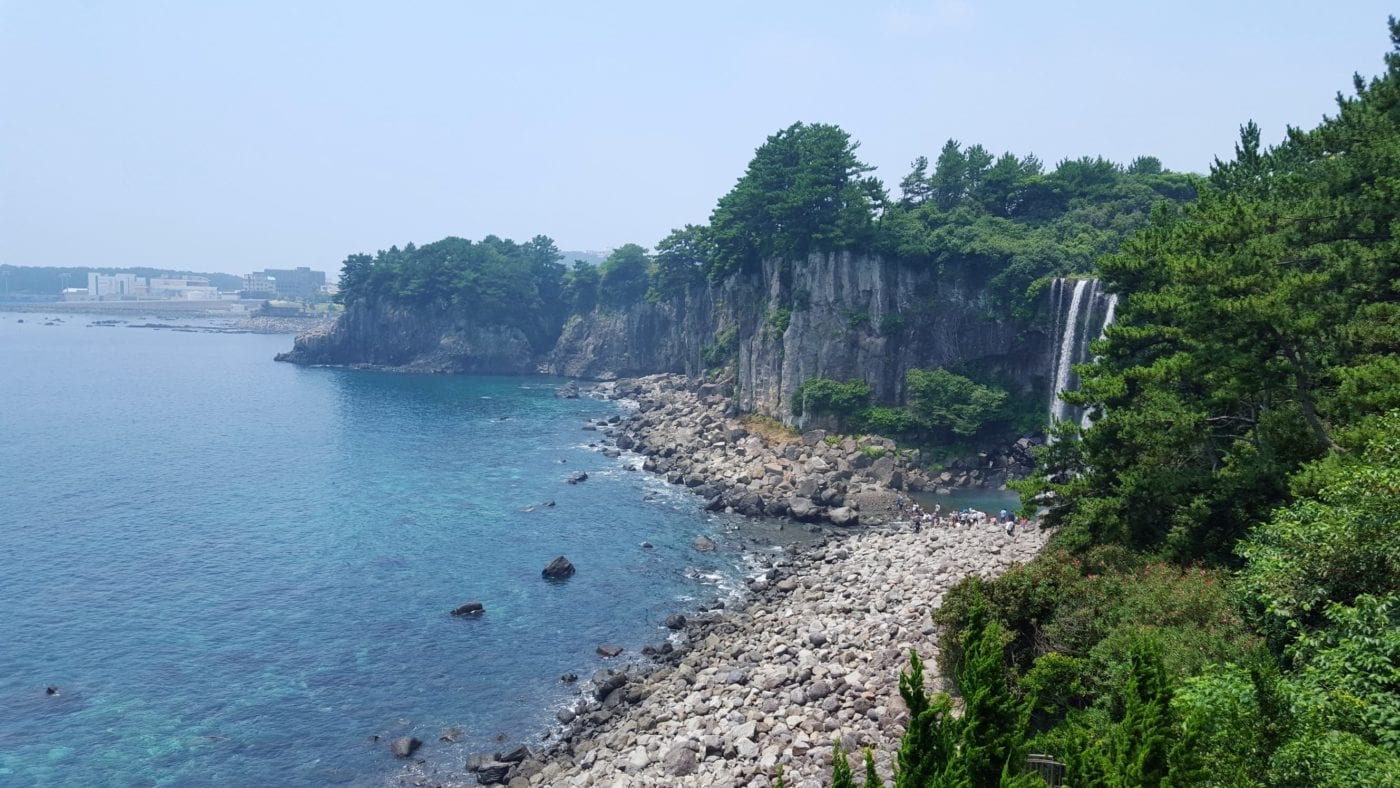
Near Seogwipo, a short detour brings you to Donnaeko Valley and its waterfalls, a shady spot popular for cool dips in summer. Inside Seogwipo, don’t miss Jeongbang Falls, one of the few waterfalls in Asia that drops directly into the ocean, pairing dramatic cliffs with sea spray views.

Enjoy the views of Jeju City and the mountain foliage in the Forest Tunnel as you make your way to Seogwipo.
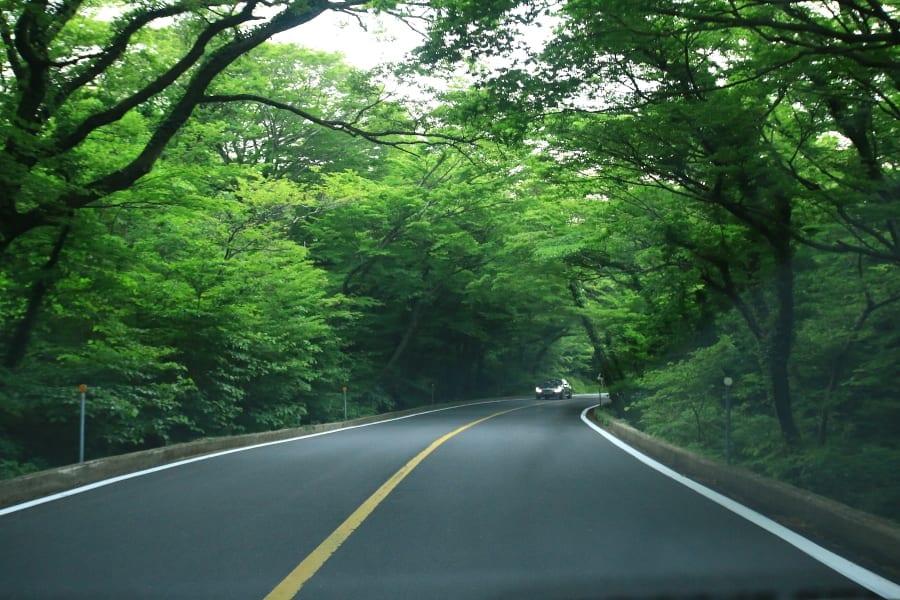
Source: Naver blog
Once you near Seogwipo, a short turnoff will take you to Donnaeko Waterfalls and inside the city you can enjoy the only waterfall in Asia that falls into the ocean at Jeongbang Falls.


Source: Lisa Fischer
On your way back to Jeju City, try taking the 1139 highway. On this road you can enjoy a beautiful view of the southern part of the island, Seogwipo’s Natural Forest, and the head of the Eorimok trail.

Source: wishbeen
Once reaching Jeju-si you can then visit Jeju’s famous Loveland and the Halla Arboretum.

There is also a coastal route, the 1132 highway, which circles the island and makes for a spectacular summer drive. Stops at Sunrise Peak (Seongsan Ilchulbong), Jeju Folk Village, Oedolgae, Sanbangsan, and Hallim Park will definitely result in a memorable road trip.

Source: Lisa Fischer


Do you actually need a car?
Driving In Jeju Island
Jeju is one of the few places in Korea where renting a car is strongly recommended if you want to see a lot in just a few days, since many major sights are about an hour from Jeju City and spread across the coast. That said, buses cover the airport, intercity routes, island “main line” corridors, and tourist circuits, with fares typically in the 1,200–3,000 KRW range and T‑money cards accepted. Airport limousine buses and intercity lines connect Jeju City and Seogwipo via multiple routes, so those who prefer not to drive can still reach many key attractions, just with more time spent in transit.
If you like quiet coastal towns and slower travel, consider extending your trip beyond Jeju and exploring other lesser‑known seaside areas like Wando County on the south coast of Korea.
Rental and license basics for foreigners
Foreign visitors can generally drive in Jeju if they bring three things: a valid passport, their home‑country driver’s license, and a physical International Driving Permit (IDP) issued under the Geneva or Vienna road traffic conventions. Most rental companies also require a debit or credit card that can be charged internationally, and many expect drivers to be at least in their early twenties with one to two years of driving experience. Rental agencies often refuse bookings if you try to rent with only a foreign license (no IDP), or if you have been in Korea longer than a year without switching to a Korean license. Always confirm current requirements with your rental company and embassy before you travel
For easy Jeju and Korea car rentals, compare prices Discover Cars and Rentalcars.com, or bundle rentals with activities on Klook.
for full rental and license details, check our guide to Driving in Korea !
FAQ: Driving in Jeju Island
Is it difficult to drive in Jeju?
Driving in Jeju is generally considered easier than driving in major cities like Seoul, thanks to lighter traffic outside Jeju City and Seogwipo and well‑maintained main roads. Most of the island’s major routes are clearly marked, speed limits are moderate, and parking around tourist sites is usually straightforward, which makes it manageable for confident city drivers.
Is it worth renting a car in Jeju Island?
For most visitors, renting a car is the most convenient way to explore Jeju, especially if you want to see both Jeju City and Seogwipo plus coastal and mountain attractions in just a few days. While buses are cheaper, they involve waiting times and more transfers, whereas a car lets you string together waterfalls, beaches, oreum hikes, and viewpoints on your own schedule.
Can foreigners drive or rent a car in Jeju?
Yes! foreigners can drive and rent a car in Jeju as long as they bring a valid passport, their home‑country driver’s license, and an International Driving Permit (IDP) issued in a Geneva or Vienna convention country. Rental firms also typically require a debit or credit card and may impose minimum age and driving‑experience requirements, so it’s important to confirm the details with your chosen company in advance.
Which month should I avoid for driving in Jeju?
Jeju has a mild climate overall, but late July and August are peak summer months with higher humidity, heavy monsoon rains, and potential typhoons that can reduce visibility and make coastal drives less pleasant. Many travelers instead prefer visiting in late spring (April–May) or autumn (September–October), when the weather is usually drier and clearer for scenic driving.