
Original Words by Chris Chou | Updated 2026 by 10 Magazine.
Cycling in Seoul
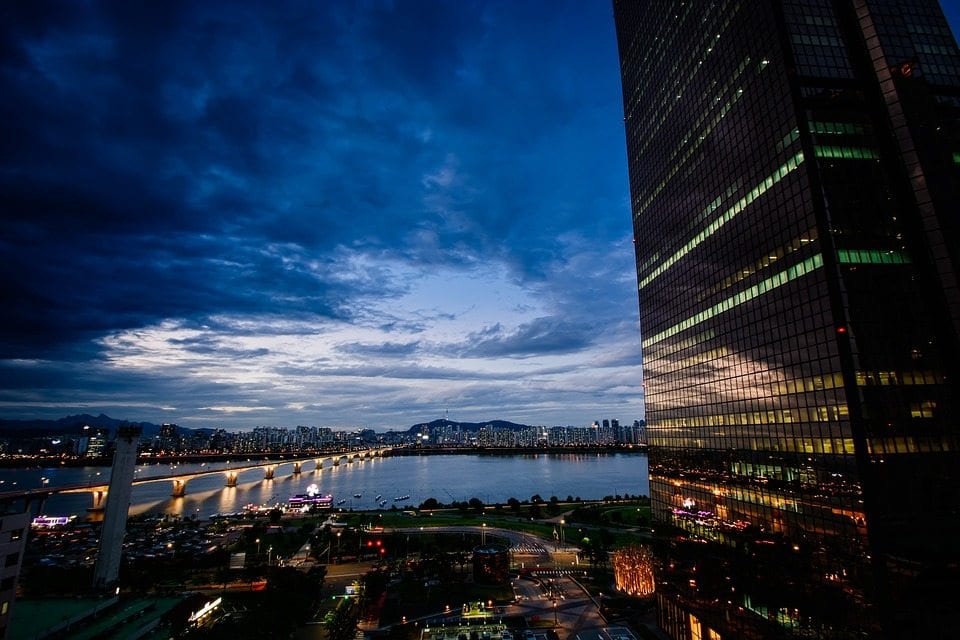
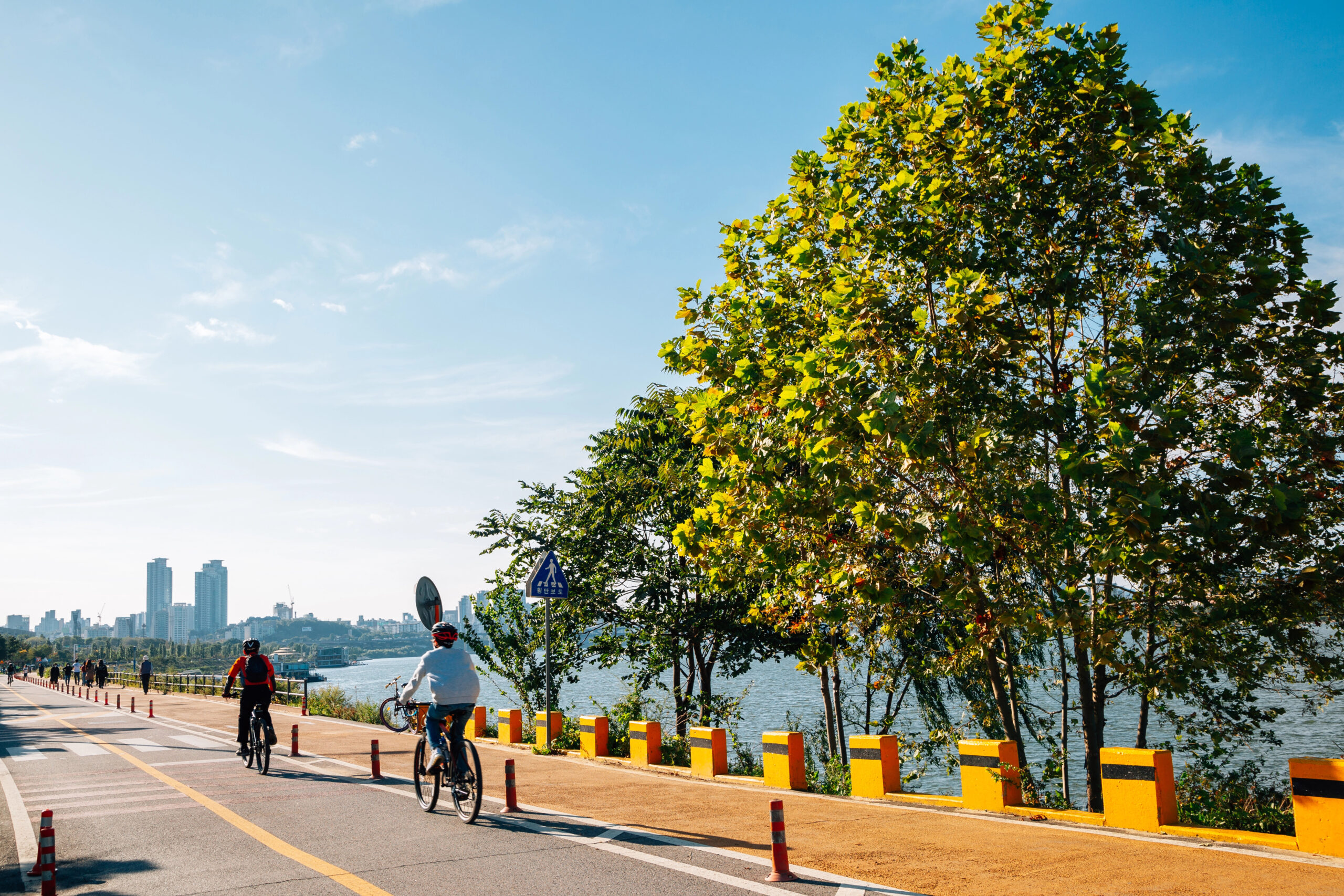
Every day, Seoulites choose to pedal a bike in one of the largest and most densely populated cities in the world. Cycling in Seoul is not only a means of transportation but also a popular pastime for all ages, thanks to riverside paths and a growing public bike‑sharing system.
It should still be noted, however, that cycling here can feel more intense than in some other international cities. As the original author, a former New Yorker, observed, streets can be uneven and drivers sometimes aggressive or inattentive to cyclists and pedestrians. That said, countless riders take to the roads and river paths every day, so if you’re feeling up to it, there are plenty of ways to get involved.
If you’re new to the city, start on the Han River paths or clearly marked bike lanes before heading into heavy traffic. These routes offer longer, flatter stretches with fewer intersections and are a good way to get comfortable riding in Seoul.
Rental Biking in Seoul
For leisure cyclists, you now have two main options: traditional Han River bike rentals and the city’s public bike‑sharing service, Seoul Bike (Ddareungi, 따릉이).
Along the Han River, rental stands offer everything from small 20‑inch bikes with training wheels for kids to multispeed cruisers, tandems, and simple mountain bikes. Expect to pay roughly 3,000 KRW per hour for a standard single bike and around 5,000 KRW per hour for tandems or premium models, with exact prices varying by vendor. Staff are often relaxed about return times, but always confirm the rate and any deposits before you ride.
If the river path isn’t your style, many main roads have bike paths built into the sidewalk, usually marked with colored paint or bike symbols. Just don’t expect pedestrians to pay much attention to them, ride defensively, use your bell, and slow down in crowded areas.
If you’d rather have someone handle the logistics, guided and self-guided electric bike experiences along the Han River are also available to book in advance through Klook.
Seoul Bike (Ddareungi)
On top of private rentals, Seoul operates a convenient public bike‑sharing program called Seoul Bike, or Ddareungi. You’ll see its green‑and‑white bikes parked at automated stations all over the city.
You can rent a bike through the official website or the Seoul Bike mobile app, both of which offer an English option, though the app is generally easier to use. Short‑term “foreigner” passes are inexpensive: a 1‑hour pass is 1,000 KRW, a 2‑hour pass is 2,000 KRW, and a 24‑hour pass is 5,000 KRW, all valid for 24 hours from first use and allowing multiple rentals as long as you return the bike within your chosen time limit. If you ride longer than your time limit in one stretch, small overage fees (typically 200 KRW per five minutes) are added. Bikes can be rented and returned at any station, making it easy to combine cycling with the subway or bus.
If you want a step‑by‑step walkthrough of passes, payments, and the app, check out 10 Magazine’s updated guide to using the Seoul Bike (Ddareungi) rental system.
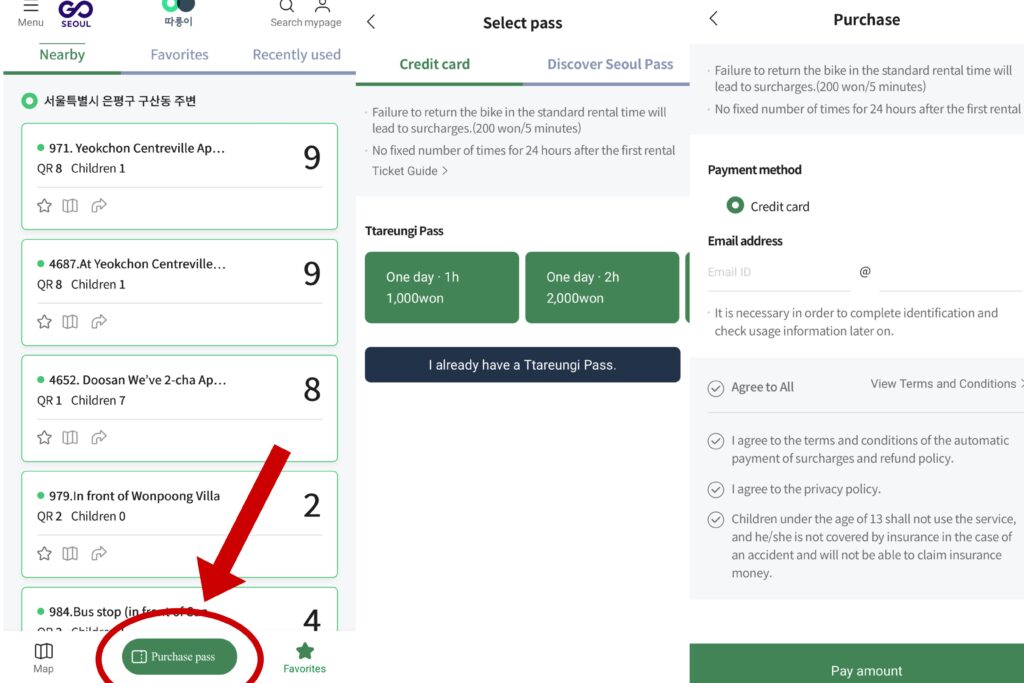
If you’ll be in Seoul longer, consider the 30‑day Climate Card, a city transit pass with a version that includes unlimited short rides on Seoul Bike for about 65,000 KRW per month as of 2025. Registering Ddareungi to the Climate Card usually requires a Korean phone number for verification.
Fixed Gear Cycling in Seoul
As in many cities around the world, a fixed gear cycling subculture has taken root in Seoul. Many riders focus on freestyle and tricks, while others simply like the clean look and direct feel of a fixed‑gear bike for city riding.
Boutique shops and small studios around the city serve this community with frames, parts, and custom builds. In the Hongdae and Hapjeong area, for example, you’ll find riders and mechanics who are active both in person and on social media, and who are often happy to chat, help with repairs, or invite you out on a ride. Because shop locations and hours change frequently, it’s best to search for fixed‑gear shops and crews on Instagram or local cycling groups before heading out.
Foreigners interested in the fixed‑gear scene will find that many of these shops and communities are friendly and welcoming. Group rides are commonly organized through Instagram, Kakao chats, and expat cycling groups, which makes it easy to plug into the growing Seoul fixed‑gear community.
Bike Shops and Prices
Most of what a cyclist needs is available in Seoul, but high‑end bikes and imported components are often more expensive than in North America or Europe. The original author’s impression of higher prices is still largely accurate, especially for premium frames and branded accessories.
For everyday cyclists, almost every neighborhood has at least one small bike shop where you can fix a flat, get a basic tune‑up, or pick up an affordable commuter bike. These are often modest, family‑run stores that you’ll spot by the line of bikes outside rather than a big sign.
If you’re planning longer rides or touring, you’ll also find specialty shops and rental services that cater to popular routes such as the Han River path and Korea’s cross‑country river trails. Some, like Bike Rental Korea, offer multi‑day rentals, panniers, and route advice for riders tackling trips between cities.
Korea‑based brands do exist, and while many products still echo international designs, a small number of local makers and frame builders are starting to stand out with more original ideas. Keep an eye on local cycling communities and markets if you’re interested in discovering unique, Korea‑made gear.
Practical Tips for Foreign Riders
Information for foreign cyclists used to be hard to find, but that has changed as cycling in Seoul has become more popular. Today, there are English‑language guides, apps, and online communities sharing route ideas, rental tips, and safety advice.
Here are a few quick suggestions if you’re new to riding here:
Where should I go biking in Seoul as a beginner?
The easiest place to start is along the Han River parks, such as Yeouido or Banpo. The riverside paths are wide, mostly flat, and have bike rental stands nearby, so you can ride without heavy traffic.
For a guided first ride, a half-day e-bike tour that covers Bukchon, Insadong and Cheonggyecheon is also a great option
How much does a bicycle cost in Korea?
Basic city/hybrid bikes start at 200,000–500,000 KRW at local shops; mid-range road/hybrids run 1–3 million KRW, high-end imports 5+ million KRW — often pricier than abroad due to tariffs.
How do I rent a Seoul Bike (Ddareungi)?
Download the English app, buy a pass (1-hour: 1,000 KRW), scan QR/enter bike ID at any station to unlock, then dock anywhere
Can I combine cycling with the subway or buses in Seoul?
Yes. Subway to a station/park, grab Ddareungi or Han rental nearby, return at another dock for easy multi-modal trips
Do I need a helmet to ride a bike in Korea?
Helmets are mandatory by law since 2018 (fine ~20,000 KRW), but adult enforcement on paths is light—wear one for safety anyway.
What tools should English speakers use to plan rides?
The Seoul Bike app, English‑language guides like 10mag.com and expat cycling or travel groups are some of the best sources for current route ideas, rental info, and safety tips. Social media and community forums are updated more frequently than many static brochures.
As cycling continues to grow in popularity, more and more people are searching for the same information, and it’s out there. Just as the original author discovered, social media is still one of the best ways to find the details you need and connect with other riders. Ride safe, and keep the rubber side down!
If you find this article helpful, please leave a comment down below !
Want more help navigating Seoul? Check out our guides to 11 Essential Apps for Seoul in 2026 and guide to using the Seoul Citywide Free Bike rental system.