When Korea’s summer humidity kicks in, the question isn’t whether to eat cold noodles — it’s which kind. While naengmyeon (냉면) gets most of the attention, Seoul’s summer noodle landscape is far richer than a single dish. From tangy kimchi-mari broth to creamy soybean kongguksu, there’s a cold noodle for every palate — and every neighborhood.
Looking for more ways to survive the heat? Check out our guide: 8 Ways to Survive Sweltering Seoul in Summer.
Why Koreans Reach for Cold Noodles in Summer
Korea’s summer food culture is built on dishes designed to cool you down from the inside out. Naengmyeon holds a special place — a dish that originated in the cold northern regions of the Korean Peninsula but became a national icon after the Korean War brought it south. Today, kongguksu (soybean noodle soup) and kimchi-mari are mentioned in the same breath as naengmyeon when Koreans talk about beating the heat.
Each of these dishes shares a common logic: cold temperature, clean flavors, and enough substance to be a proper meal. Whether you’re an expat navigating Korean food for the first time or a long-term Seoul resident looking to branch out, here’s your summer cold noodle guide.
The Best Korean Cold Noodles Dishes to Try
Kimchi Mari Cold Noodles 김치말이국수
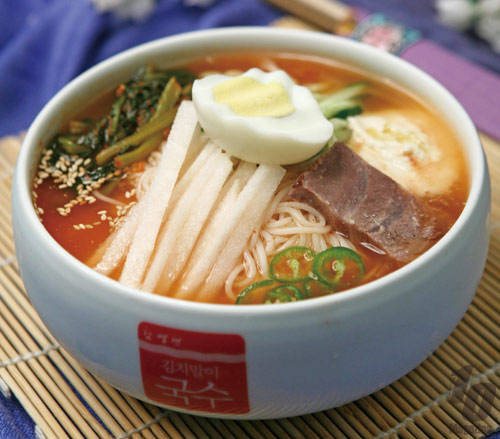
In Myeongdong, I tried kimchi mari (김치말이), a wheat noodle dish with acorn jelly, seaweed, lettuce leaves, and kimchi, among other ingredients. It has a pleasantly spicy broth, with bits of cucumber and hard-boiled egg.
A similar dish is kimchi mari-bap (김치말이밥), which uses rice instead of noodles in the same chilled, spicy broth.
Where to try it: Nunnamujip is well-regarded for its traditional kimchi mari guksu, and the dish can be found at many traditional Korean restaurants across the city. Samcheong-dong is another neighborhood worth exploring for this style of dish.
Jungguk Naengmyeon
On my second evening out, I tried jungguk naengmyeon (중국냉면), and I wish I could find it closer to my apartment. This dish features a milky broth with Chinese-style noodles (similar to those used in jjajangmyeon). The soup is typically made from chicken stock, peanut puree, scallions, and ginger.
It’s a bit heavier than other cold noodle dishes, but the peanuts give it a rich, satisfying flavor — somewhat reminiscent of satay sauce. The version I ordered included tomatoes, cucumber, and dark chicken meat. This was my absolute favorite of all the noodle dishes I tried.

This dish is less common than naengmyeon or kongguksu, so it takes a bit of hunting — but it’s worth it. Check menus at Chinese-Korean fusion spots and noodle houses in central Seoul neighborhoods.
Kongguksu
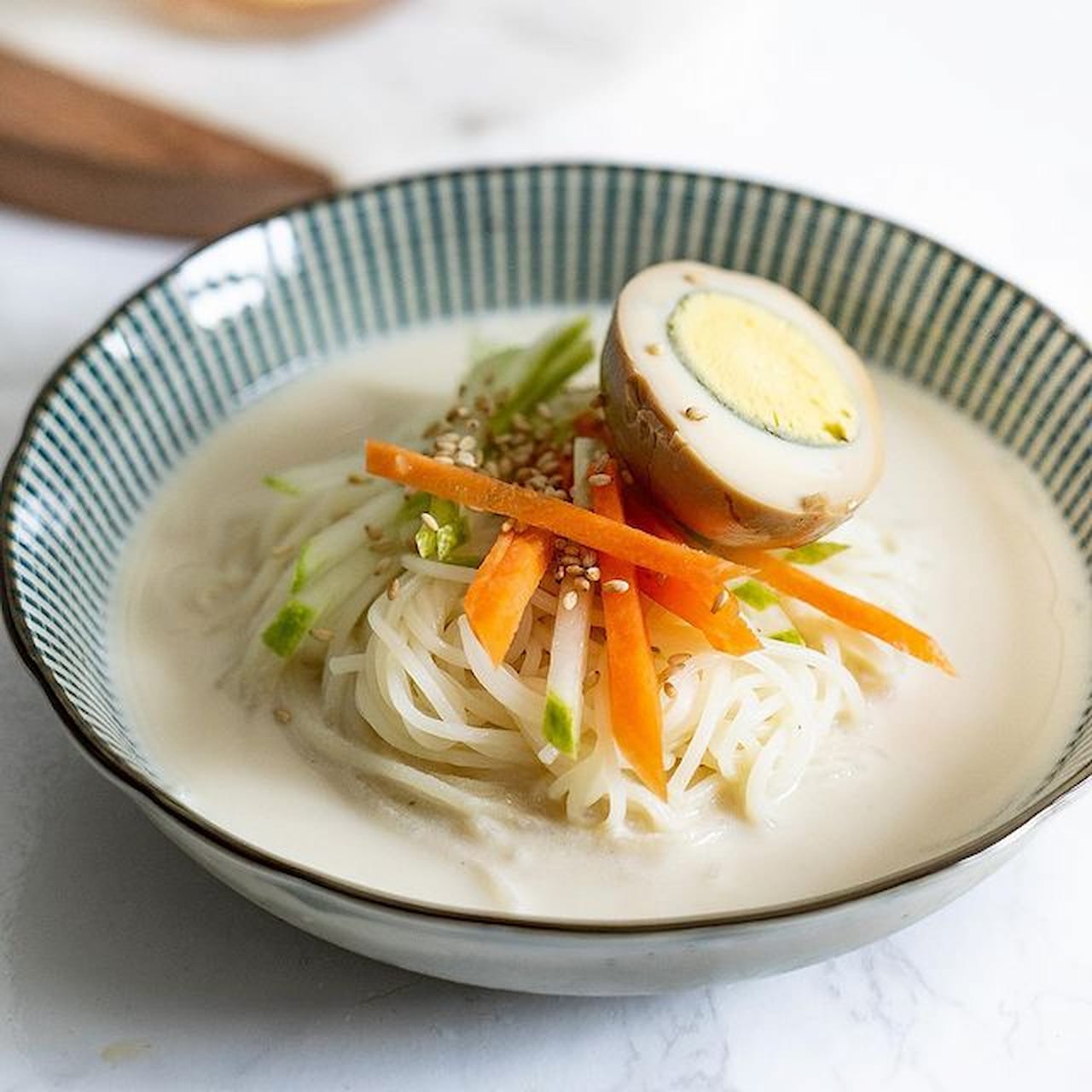
Another cold noodle dish is kongguksu (콩국수). For this dish, cold somen noodles are served in a chilled soybean soup. When I tried it, it was topped with tomato slices, scallions, and cucumber. It tasted like a nutty, savory milkshake.
This cold noodle dish is typically made from scratch with boiled, peeled, and blended soybeans, though it is sometimes prepared using soy milk. Naturally, the chef in me wanted to experiment by adding different toppings.

Where to try it: Jinju Hoegwan (진주회관), a 60-year-old institution near City Hall Station in Jung-gu, is consistently cited as Seoul’s gold standard for kongguksu. Arrive before noon on weekdays — the lunch rush is intense.
Hamheung Naengmyeon
The last stop on my noodle tour was Namdaemun, where I tried hamheung naengmyeon (함흥냉면), another northern-style dish. This version includes noodles topped with hongeo (홍어), Korea’s famously pungent fermented skate.
The fish was sliced into thin strips and tossed with a gochujang-based sauce containing, among other ingredients, what tasted like a sports drink. It came with the usual additions of egg and cucumber. I managed a small portion purely for research purposes — the spicy sauce helped balance the strong flavor, and a beer helped even more.
Where to try it: The Ojang-dong neighborhood in Jung-gu is Seoul’s historic hub for Hamheung-style cold noodles. Multiple restaurants line Mareunnae-ro, with Ojang-dong Heungnamjip (four generations strong since 1953) being a Seoul Future Heritage site. Take Subway Line 2 or 5 to Euljiro 4(sa)-ga Station, Exit 8.
Tips for Ordering Cold Noodles in Korea
- Customize your broth: Most cold noodle restaurants provide vinegar and spicy mustard. Add them gradually — a little goes a long way.
- Cold doesn’t mean bland: The restrained flavor of mul naengmyeon or kongguksu is intentional — taste first before seasoning.
- Go early or late: Seoul’s top cold noodle spots fill up quickly in summer. Aim for before noon or between 2–5 p.m.
- Check seasonal hours: Some restaurants adjust their hours during peak summer months. Confirm via Naver Maps before visiting.
As long as it’s still baking outside, go out and slurp down a few of these noodle dishes.
Looking for other Korean dishes? Check out Korean night markets in Seoul to discover even more. If you found this article helpful, feel free to leave a comment below.