

Original Words by Ciaran Hickey
When I first got to Korea I was regularly taken to eat Korean food in different parts of the city. Having faced down the bewildering array of Banchan (반찬, side dishes), the Korean pancake Jeon became my go-to, my safe port in a storm.
Easy to pick out in a crowd and guaranteed not to give unusual taste sensations, Jeon was my easy transition to the wonderful food of Korea. And after I eventually made a few at home myself, it became one of my favorite quick and easy dinners.
What Is Jeon
Jeon is a basic term for a multitude of pancake-style appetizers or side dishes. These are often served at celebration or ceremonial tables such as Jesa (제사, ancestral rites) and Charye (차례) at Chuseok.

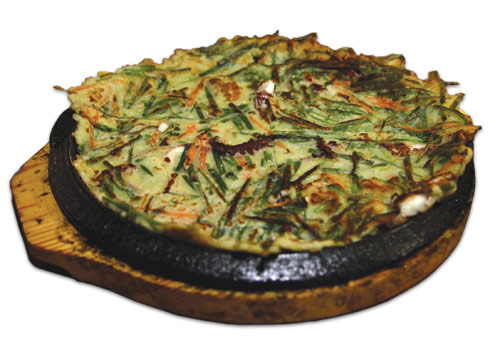
Jeon is usually named after the main ingredient. One of the most basic and common varieties is Pajeon (파전), made with scallions and chives. It can be found both hot and cold and ranges from the size of a small coin to the width of a frying pan. It is so simple to make: batter made of basic flour, water and egg is mixed with chopped green onions and then pan-fried.
Other popular variations include kimchi, mushroom, prawns, beef, chili peppers and different kinds of fish and seafood. In some cases, ground meatballs, large whole vegetables or pieces of meat are coated with the batter and fried. This is technically not a pancake but it still falls into the same family. In a lot of the markets here you will see vendors with rows of what look like tempura of various vegetables but are in fact these delicious Jeon.
Alongside its other family members is Nokdujeon (녹두전) or as it is also known, Bindaetteok (빈대떡). I came across this first in one of the old covered markets where an old lady was spinning two giant stone wheels to create a mushy paste. It turned out to be mung beans and she was making Nokdujeon. The paste was mixed with a little green onion and fried, crispy golden on the outside and still soft in the center. Delicious, and a great beer snack.
Jeon also is found in Korean desserts where a pancake using edible flowers is used to make Hwajeon (화전). The base is made with sticky rice flour and is close in texture to Tteok (떡, rice cake). They stand out as the bright pink flower on the flour background is very striking. It is sometimes served with a punch made with the same azalea flower petals.
As one of the simplest but most enjoyable dishes to be found in Korean cuisine, Jeon should become part of everyone’s cooking repertoire before they leave Seoul and its great food behind.
Jeon In Seoul
Ho Seonsaeng Jeon
Address: Seoul, Jongno District, Jong-ro 32-gil, 15 1층
Myeongdong Joomak
Address: 25-1 Myeongdong 10-gil, Jung District, Seoul (2nd Floor)
Jungdamun Bukchon
Address: 33-9 Gyedong-gil, Jongno District, Seoul





3 comments
Kristy
I love kimchijeon and pajeon! I never considered going to a specialty restaurant to eat it!
jason_teale
As a testament to how tasty this Korean treat is, I remember taking some friends out to eat at a Korean restaurant in Vancouver. The Jeon was a hit for this first timers. For me it is always what I eat if there is nothing else on the table that I am a fan of.
As for that addicting ho-ddeok… wow. It is incredible stuff! If you are around the theaters in Nampo-dong, near Ja-galchi market, try the shi-ot ho-ddeok. It is filled with sunflower seeds and crushed nuts. It is amazing!
chanel_claire
I really enjoy pajeon and I made my own chamchijeon from scratch using a YouTube video for guidance. Great for snacking or as a side dish, it is true that pancakes are no longer just for breakfast.