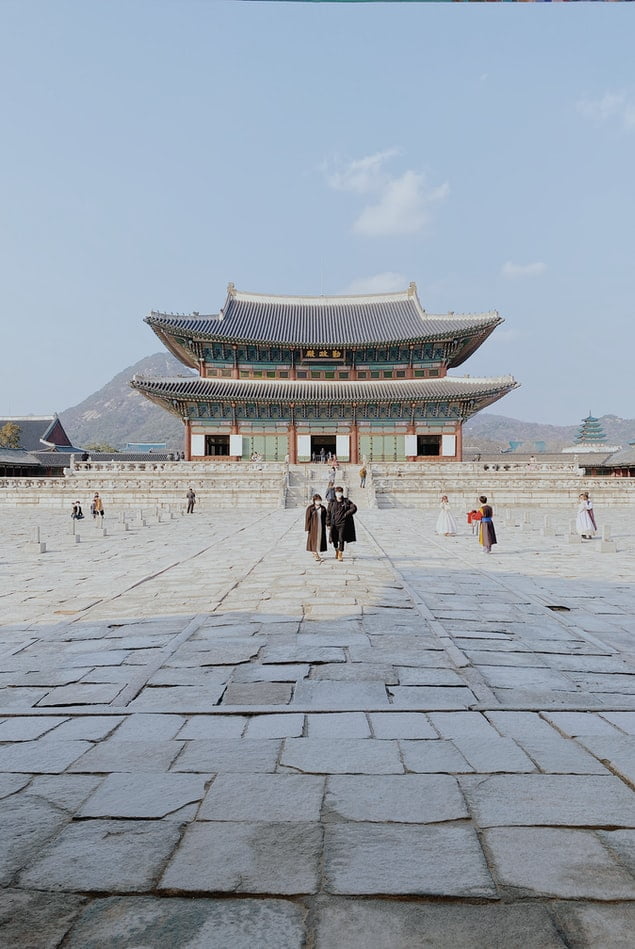
Gyeongbokgung Palace in Seoul
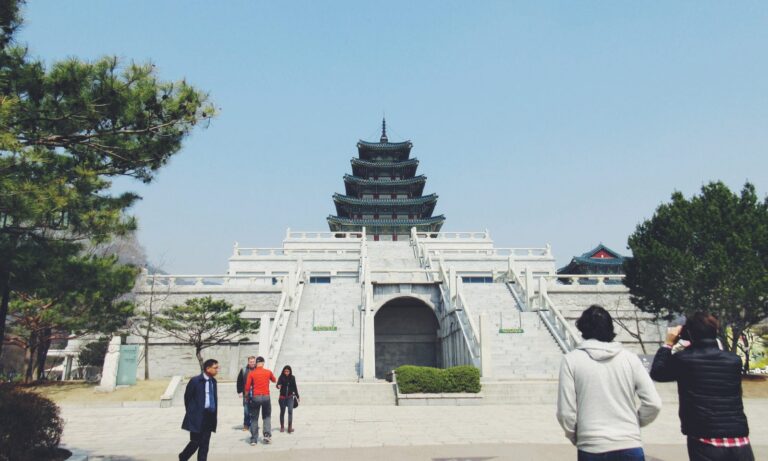
Turn up in a hanbok and you walk in free. That is the first thing to know about Gyeongbokgung, the main palace of the Joseon kings and the largest of Seoul’s five royal palaces; the second is that it is closed on Tuesdays. The grounds sit at the top of Gwanghwamun Plaza, inside a wall 2,404 metres long, with office towers behind the roofs on every side.
The Meaning of Gyeongbokgung
The name means “the palace greatly blessed by heaven” (gung is Korean for palace), and it is also called the Northern Palace. Gyeongbokgung (경복궁, 景福宮), or Gyeongbok Palace, was built in 1395, more than 600 years ago, as the main royal palace of the Joseon Dynasty.
Gyeongbok Palace History
When the palace was finished, the capital of Korea moved from Gaegyeong to Seoul, then called Hanyang, and Gyeongbokgung stood at the heart of the new capital as the first of the five palaces built there.
It stayed the main royal palace until fire destroyed the grounds during the Japanese invasions of the Imjin War (1592–1598). Changdeokgung was rebuilt afterwards and took over as the main palace, and Gyeongbokgung lay abandoned for 273 years, almost three centuries.
Rebuilding began in 1867 on the orders of the regent Heungseon Daewongun, on a larger scale than before and with more buildings. It did not last. Under Japanese occupation in the early 1900s the palace, a symbol of Korean sovereignty, was pulled down again; by 1915 more than 90% of its buildings were gone.
Gyeongbokgung Today
Restoration has been under way since 1990. By the end of 2009 about 40% of the buildings lost under the occupation had been rebuilt, and the government’s second phase aims to have 76% of the original palace standing by 2030, so the site you see is still changing from one visit to the next.
Gyeongbokgung Palace Admission Fees
- Adults (ages 19–64): 3,000 won; groups of 10 or more: 2,400 won
- Children (ages 7–18): 1,500 won; groups of 10 or more: 1,200 won
Free admission for children aged 6 and under, for everyone aged 65 and over, for anyone wearing hanbok, and for all visitors on the last Wednesday of each month.
Palace Hours
- November–February: 9:00–17:00 (last admission 16:00)
- March–May: 9:00–18:00 (last admission 17:00)
- June–August: 9:00–18:30 (last admission 17:30)
- September–October: 9:00–18:00 (last admission 17:00)
Closed on Tuesdays. Last admission is an hour before closing in every season, so a winter visit has to start by 16:00; in June, July and August you have until 17:30.
Things to Do at Gyeongbokgung
Hanbok rental is the most common way to visit, and the one most people photograph: the shops around the palace rent them for a few hours or a day at about 15,000–35,000 won, more for elaborate designs or accessories, and the free entry covers part of the cost. Holders of the Discover Seoul Pass skip the ticket queue, which on a weekend afternoon is worth knowing.
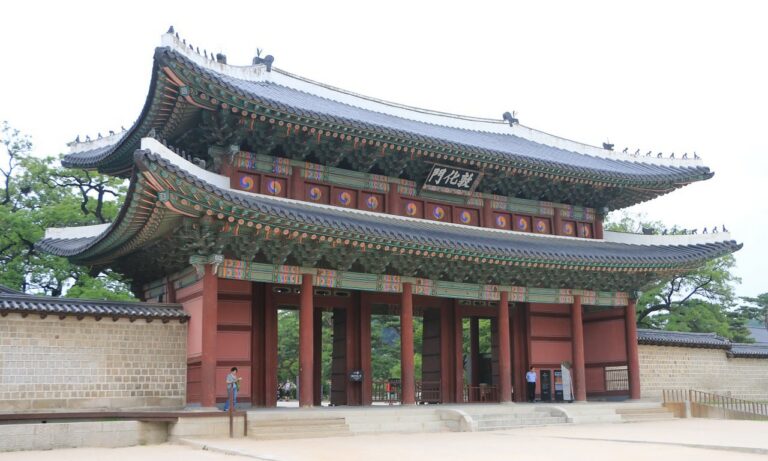
Start at Gwanghwamun (광화문), the main gate and the largest at the palace, which faces Gwanghwamun Plaza. The gate-opening and gate-closing ceremonies and the changing of the palace guards happen here.
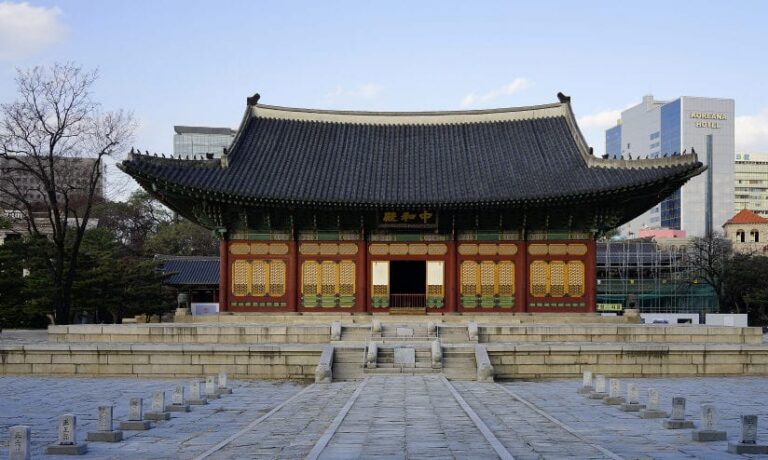
Inside, make for Geunjeongjeon (근정전), the throne hall and the largest building in the palace. The kings of Joseon held court here; it burned with the rest in the 1590s and was rebuilt in 1867, and it is a designated national treasure.
From the palace it is a short walk to Samcheong-dong, to Seochon (also called King Sejong Village) and to Bukchon Hanok Village. The palace’s road address is 161 Sajik-ro, Jongno-gu, and the information line is 02-3700-3900.
How to Get to Gyeongbok Palace by Subway
Take Line 3 (the orange line) to Gyeongbokgung Station and leave by Exit 5, which brings you out inside the palace grounds. Anguk Station, also on Line 3, works too: use Exit 1 and walk west.
How to Get to Gyeongbok Palace by Bus
Buses 7025, 1020, 109, 171, 172, 601 and 606 all stop at the Gyeongbokgung Palace stop, right in front of the palace.
For the other four palaces, see The 5 Oldest Seoul Palaces You Should Be Visiting.