
If you’re planning a trip to South Korea and want to explore beyond Seoul, you’ll almost certainly ride the country’s national railway at some point. Korean trains are famously convenient, fast, and reliable. And, in 2026, they got even better. On September 1, 2026, Korea completed the historic merger of its two high-speed rail operators, KTX and SRT, into a single unified network under the KTX brand, ending a decade of split operations and bringing lower fares, more seats, and one integrated booking app for travelers. This guide covers everything you need to know about traveling by train in Korea after the merger: train types, updated 2026 prices, how to book tickets, and practical tips for a smooth trip. It’s nowhere near as dramatic as Train to Busan — promise.
KTX and SRT Have Officially Merged: What Changed in 2026
After nearly a decade of KTX (operated by Korail) and SRT (operated by SR Corp.) running as separate, competing high-speed rail systems, the Korean government finalized their full integration on September 1, 2026, folding SR into Korail and unifying all high-speed trains under the KTX name. The merger was approved by Korea’s Fair Trade Commission in August 2026 after regulators concluded it posed little risk to competition, since fares and schedules remain government-regulated. Here’s what travelers need to know about the change:
- One brand, one network: SRT trains are being repainted and reissued as KTX trains, with the SRT name being phased out entirely by 2032, though the Suseo Station route (formerly SRT-only) is now fully part of the KTX system.
- Fares dropped by 10%: KTX fares have been reduced by an average of 10% to match the previously cheaper SRT pricing, so trips like Seoul to Busan are now noticeably more affordable than before the merger.
- More seats, more departures: The merger added roughly 15,000 extra seats on weekdays and 17,000 on weekends, with total daily services rising from 379 to 402 on weekdays. Seat capacity on Suseo-line routes alone jumped by about 30%.
- One loyalty program: Passengers on former SRT routes now earn the same 5% mileage rewards previously exclusive to KTX riders.
- One booking app — KORAIL+: A single integrated app and website, KORAIL+, now handles bookings for all former KTX and SRT routes, replacing the need to juggle two separate apps and websites.
If you booked an SRT ticket in August 2026, it’s still valid as-is through August 31; from September 1 onward, all high-speed rail tickets — regardless of the old KTX or SRT branding — are sold through the unified system at the new, lower fares
Main Types of Trains in Korea
Korea’s national railway is operated by Korail, which runs several types of trains: KTX, ITX-Saemaeul, Mugunghwa, Nuriro, Airport Express trains, and the ITX-Cheongchun, along with sightseeing trains and metropolitan subway services in Seoul and Busan. Now that SRT has been absorbed into Korail, the three main train types tourists will encounter are KTX (including former SRT routes), ITX-Saemaeul, and Mugunghwa.
KTX (Korea Train eXpress) — Now Including Former SRT Routes
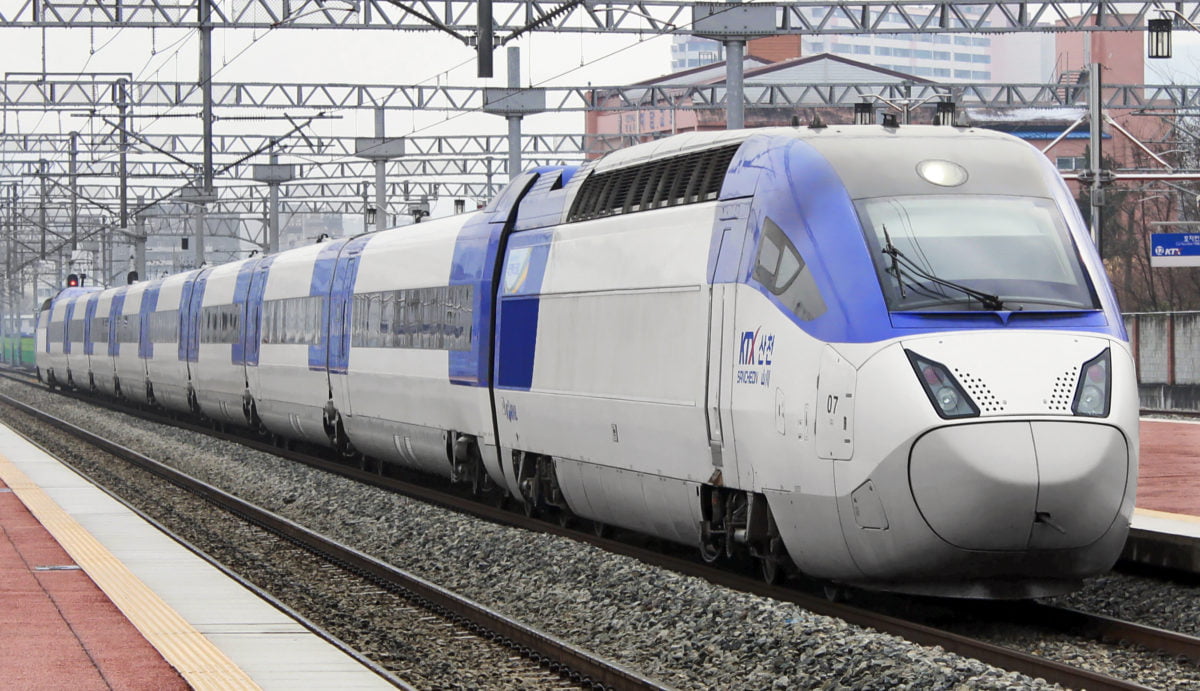
KTX is Korea’s flagship high-speed rail service and the best option for tourists who want to reach major cities quickly. It connects Seoul to Busan in roughly 2 hours 30–45 minutes, Seoul to Daejeon in about 1 hour, and Seoul to Suwon in around 30 minutes. Since the 2026 merger absorbed SRT, KTX now also departs from Suseo Station in southeast Seoul in addition to Seoul Station, giving travelers more departure points and significantly more seat availability than before.
Thanks to the merger, the KTX fare from Seoul to Busan has dropped roughly 10% to align with the old, cheaper SRT pricing, a fare cut that will be phased in over three years starting September 2026. Korail also operates the newer KTX-Eum (KTX-이음), an eco-friendly, Korean-built electric multiple unit (EMU) train introduced in 2021 that helps shorten travel times around the country. Starting in 2027, 31 new high-speed trainsets with roughly 500 seats each, about 90 more seats per train than the current KTX-Sancheon, will be rolled out to further expand capacity.
Former SRT Trains (Now Part of the KTX Network)

Trains that used to run as SRT — departing from Suseo Station in southeast Seoul — are now fully integrated into the KTX system, but they retain some of the comfort and lighter crowds that made SRT popular with savvy travelers. These trains still connect passengers to Mokpo, Busan, and other major cities, and passengers on these routes now earn KTX mileage points for the first time. Because seat capacity on Suseo-line services expanded by around 30% after the merger, these routes are actually a smart pick for travelers hoping to snag less crowded seats during peak Korean holiday travel.
ITX-Saemaeul (ITX-새마을호)

The ITX-Saemaeul, or Intercity Train eXpress, is the second-highest class of Korean train after KTX. It runs slower than KTX because it stops at more stations, which makes it a convenient choice for reaching smaller or more specific destinations. Many travelers find the ITX more comfortable than KTX thanks to extra legroom, and groups can rotate seats to face each other for a shared table setup. The Seoul-to-Busan journey on ITX takes around 3.5 hours and remains one of the most budget-friendly ways to see the country without sacrificing comfort.
The ITX-Cheongchun, launched in 2012, connects Seoul and Chuncheon and gives travelers easy access to popular tourist spots like Nami Island, Petite France, and several K-drama filming locations.
Mugunghwa (무궁화호)
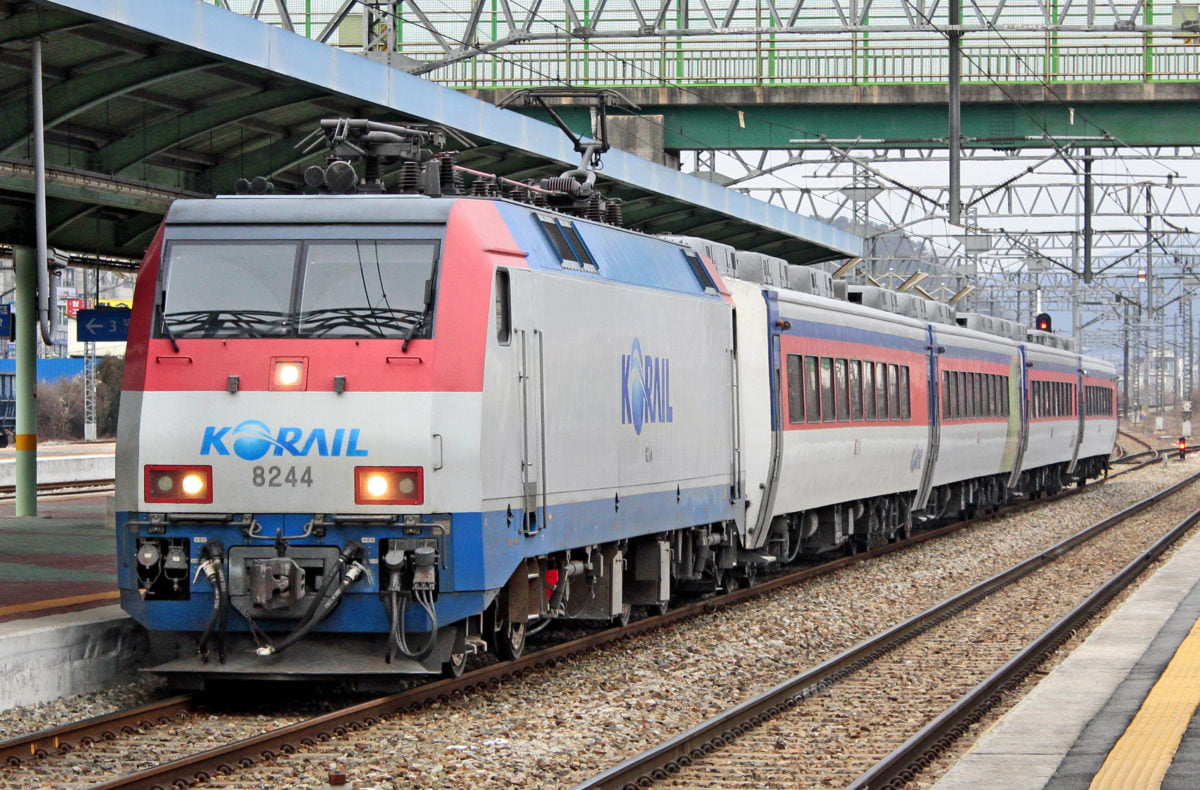
Mugunghwa is Korea’s oldest and most budget-friendly train class. It’s much cheaper than KTX and ITX but stops at far more stations, making it ideal for shorter trips or reaching niche destinations off the high-speed rail map. The Seoul-to-Busan journey takes about 4.5 hours — nearly double the KTX travel time — but at a fraction of the cost.

Mugunghwa offers reserved seats, unreserved seats, and standing areas, and works best for journeys under two hours since the ride can get bumpy on longer routes.
Korean Trains Schedule
Three options for ‘Seoul to Busan’: how long, how much, how comfortable?
KTX
Travel time: ~ 2 hours 30 minutes
Price: ~ 46,000 KRW – 51,000 KRW
Comfort: Very comfortable, high speed, and most departures
ITX-Saemaeul
Travel time: ~ 3.5 hours
Price: ~ 42,600 KRW
Comfort: Comfortable, extra legroom, and groupable seats
Mugunghwa
Travel time: ~ 4.5 hours
Price: 28,600 KRW
Comfort: Basic comfort, and best for short trips
Because fares are being cut gradually over three years starting September 2026, exact prices will keep shifting slightly. Always confirm current pricing on the KORAIL+ app or website before booking.
How to Purchase Korean Train Tickets in 2026
You can purchase train tickets online or at any station up to a month before the departure date. Purchasing tickets online or offline is incredibly simple, and both have English services available, if required.
Book Through KORAIL+ (The New Unified App)
The biggest change for ticket-buyers in 2026 is KORAIL+ (Android | iOS), the newly launched integrated app that replaced the separate Korail Talk and SRT booking platforms. KORAIL+ now lets you search and book every high-speed rail route, former KTX and former SRT alike, in one place, along with ITX-Saemaeul and Mugunghwa tickets. Simply select your route, date, and number of passengers; if you’re chasing a cheaper fare, check transfer routes, since Korean train connections are famously punctual and trains depart at the exact scheduled minute.
To book, enter basic personal information and payment details; after confirmation, you can check your seat reservation on the app. It’s still smart to bring this confirmation, along with your payment card, to a station ticket office to get a physical ticket issued as a backup — useful in case of tech hiccups or someone else sitting in your seat.
You can also visit Korail’s website to book your ticket. It is easy to use, and follows a similar format as the app. Don’t forget about the information that you entered (such as your password) because, unlike the app, you will need it in order to look at your ticket online.
Booking at the Station

Tickets can also be purchased directly at any national train station. Popular routes can sell out roughly a week before departure during peak season, so book a few days ahead if you have flexibility. Stations have clear Korean and English signage directing passengers to ticket offices, and self-service kiosks are typically located nearby for quicker purchases.
Korail Pass
Frequent train travelers should consider the Korail Pass, a cost-effective option for tourists planning multiple long-distance trips within a short window. Since the merger expanded the combined high-speed rail network, the pass now offers access to a broader, better-connected system than before.
Traveling During Korean National Holidays
Like any country, it can be difficult to book tickets to travel during national holidays in Korea. This includes Seollal (Lunar New Year, usually around the end of January), Chuseok (late September-early October), Christmas Day, and New Year’s Day as most of the country travels to see family. The 2026 merger’s seat capacity boost (up to 17,000 extra seats on weekends) should ease some of this pressure, but popular routes will still sell out fast during holidays.
Book as early as possible, or contact station customer service directly if tickets appear sold out.
Refunds
Refunds can be processed easily at the ticket office, online, or through the KORAIL+ app. From Monday to Thursday, cancellations made more than 3 hours before departure are free, while cancellations within 3 hours incur a 10% fee. From Friday to Sunday and during holidays, cancellations more than 24 hours out carry a flat 400 KRW fee, while cancellations between 24 and 3 hours before departure cost 5% of the ticket price.
If you miss your train entirely, refunds are only available at station ticket offices: a 15% fee applies within 20 minutes of departure, 40% between 20 and 60 minutes, and 70% after more than an hour.
What to Expect on a Train in Korea
Here are practical tips for a smooth train journey in Korea:
- Track your expected arrival time closely on ITX and Mugunghwa trains, since they stop frequently and announcements aren’t always made in English.
- Even if you book online, get a physical ticket printed at the station as backup — crew members rarely check tickets on board, but you’re required to carry proof of purchase.
- Arrive early and follow station signage; Korean stations are extremely well organized in both Korean and English.
- Stock up on snacks and drinks before boarding. Onboard amenities are minimal, usually just a vending machine, so hit a convenience store at the station first.

- Stand at the correct platform section for your specific train type; since train lengths vary, standing in the wrong spot can mean a mad dash down the platform when the train doesn’t stop where you expect.
- Keep noise levels down; there’s no official quiet car, but Korean train etiquette expects a calm, quiet cabin.
Planning to stay in Seoul the whole time? Check out our full guide to Seoul’s Climate Card or Climate Card Plus/K-Pass for unlimited public transit options!