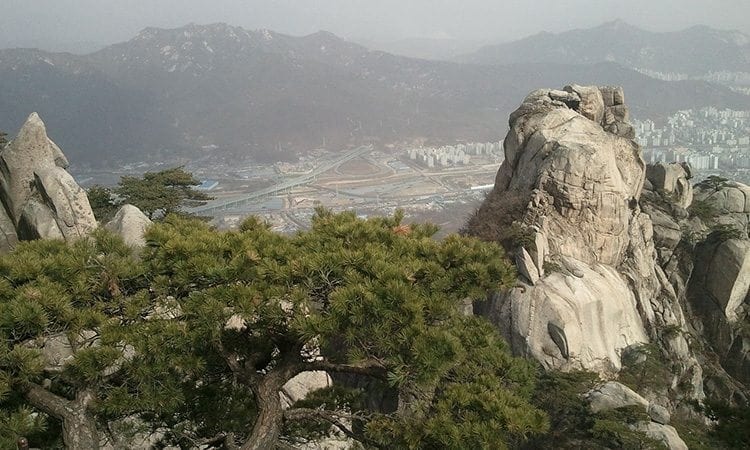
Bukhansan
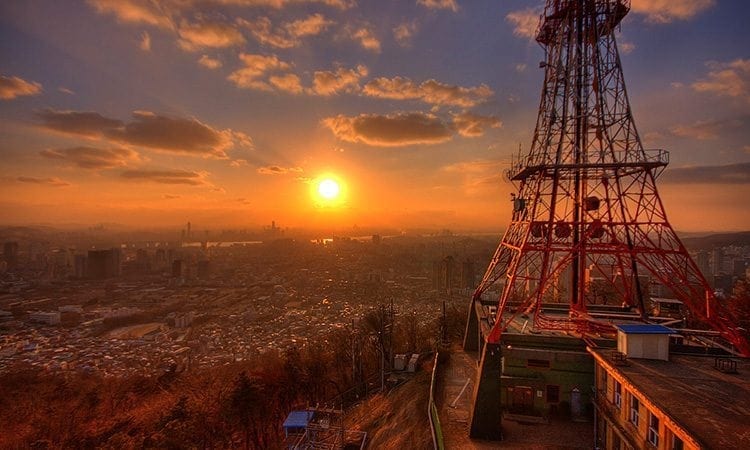
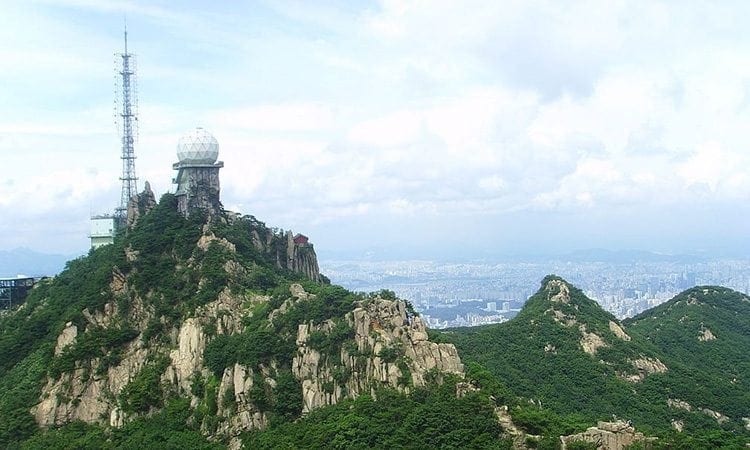
You can see it from most of Seoul, and from the top you can see most of Seoul back. Bukhansan, or Bukhan Mountain, is the highest mountain inside the city limits and a national park on its northern edge. The name means “big mountain in the north”, because it marks the city’s northern border.
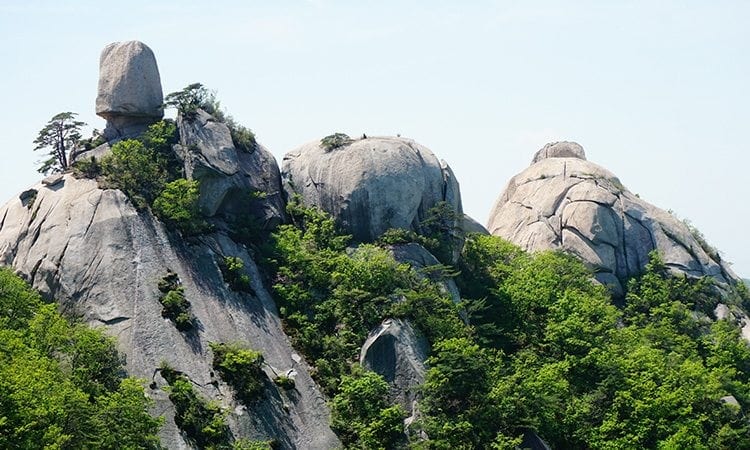
It has three main peaks: Baegundae at 836.5 m (2,744 ft), Insubong at 810.5 m (2,659 ft) and Mangyeongdae at 787.0 m (2,582 ft). Seoul has seven other mountains over 600 m, Dobongsan and Suraksan among them, but none higher than this one.
Hiking Courses
1 Day Courses
The park service grades all 13 of its day courses for beginners. The shortest is under two and a half kilometres; the longest, Obong, is six and a half. Times are the park’s own estimates.
- Bibong Course (Difficulty – Novice / 1 hour 20 minutes / 3.8 km)
- Uiam Course (Difficulty – Novice / 1 hour 10 minutes / 2.5 km)
- Bukhansanseong Course (Difficulty – Novice / 2 hours / 3.4 km)
- Obong Course (Difficulty – Novice / 2 hours 10 minutes / 6.5 km)
- Bogukmun Course (Difficulty – Novice / 1 hour 20 minutes / 2.4 km)
- Sinseondae Course (Difficulty – Novice / 1 hour 40 minutes / 3.2 km)
- Baegundae Course (Difficulty – Novice / 2 hours / 1.9 km)
- Sogwicheon Course (Difficulty – Novice / 2 hours / 4.8 km)
- Mangwolsa, Podae, and Hoeryong Courses (Difficulty – Novice / 1 hour 40 minutes / 5.8 km)
- Sapae Mountain Course (Difficulty – Novice / 1 hour 40 minutes / 5.5 km)
- Daedongmun Course (Difficulty – Novice / 1 hour 10 minutes / 2.7 km)
- Samobawi Course (Difficulty – Novice / 2 hours 30 minutes / 5.85 km)
- Daenammun Course (Difficulty – Novice / 2 hours 30 minutes / 5.8 km)
Peak Season Info
The park counts six months as peak season: spring (1 April to 31 May), summer (1 July to 31 August) and autumn (1 October to 30 November). Expect company on the trails then, especially at weekends.